Services

Electric vehicle charger installation

A home charge point needs its own circuit from the consumer unit, protection suited to an electric car, and a unit mounted where you actually park. We install the charger, the supply and the earthing arrangement it needs, then certify and notify the work like any other new circuit.

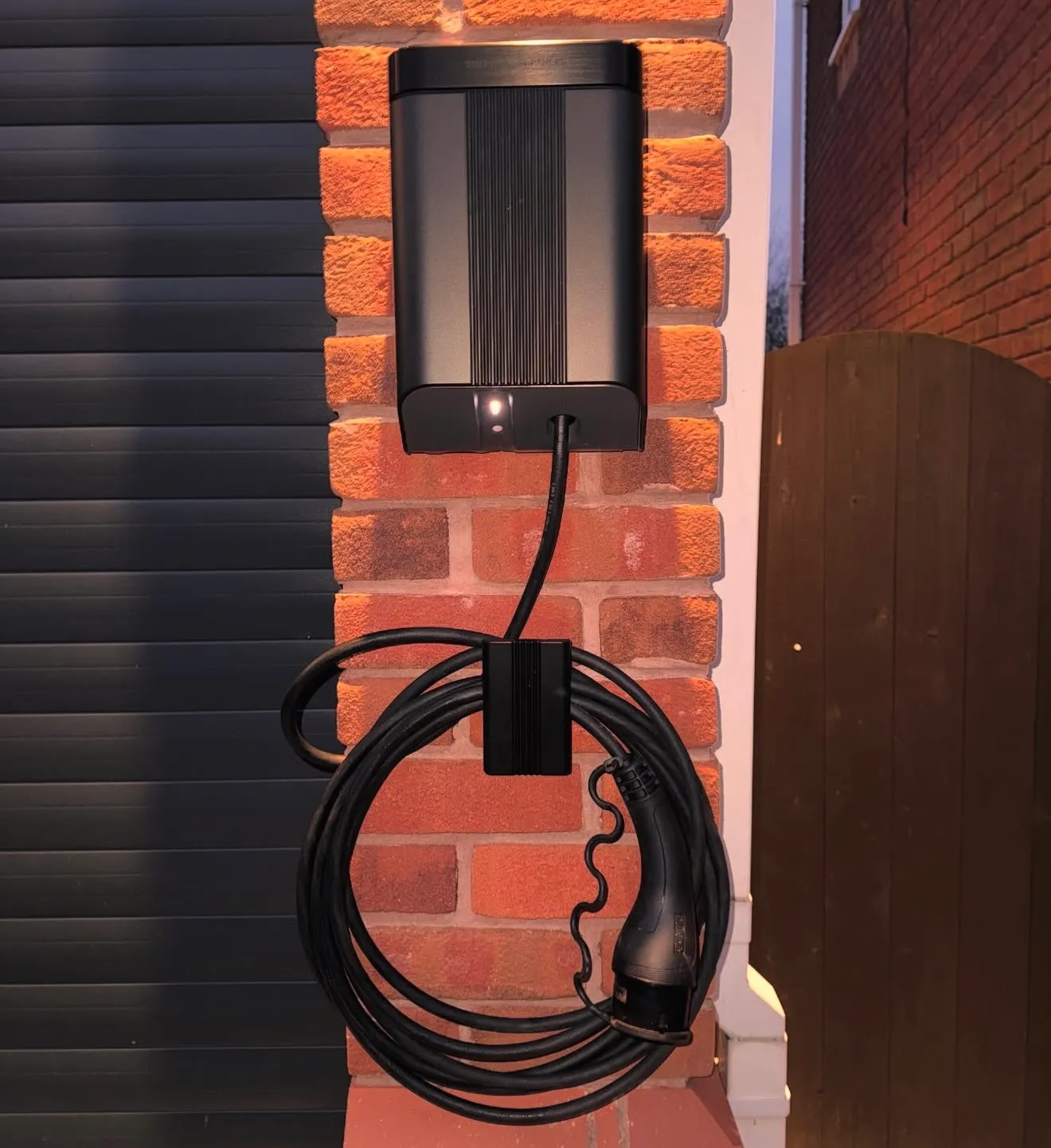
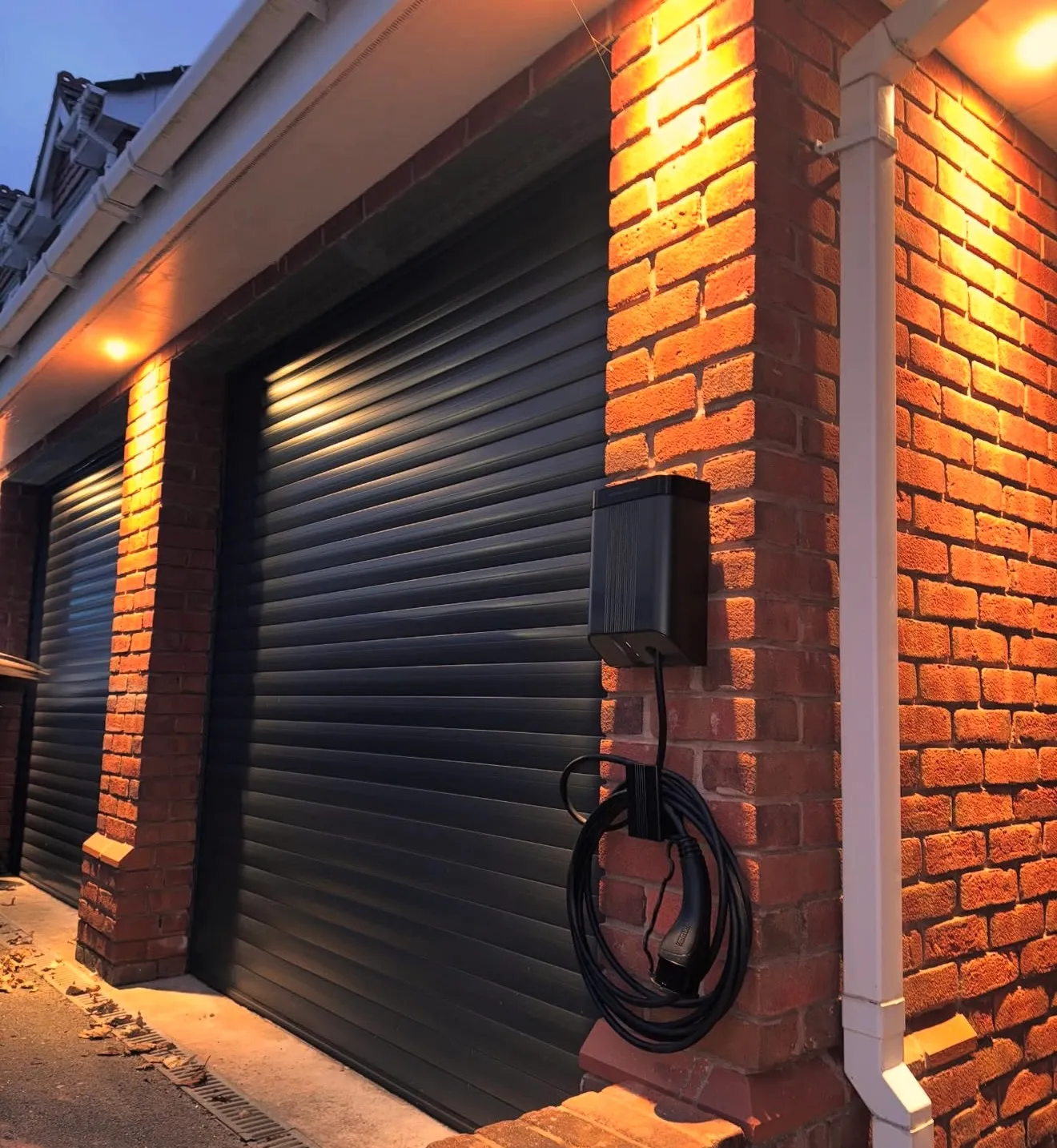
A black EV charger on a brick pillar between two garage roller doors, lit at dusk by soffit downlights.

What's involved

A check of your consumer unit and incoming supply for capacity, a dedicated circuit run to the charging position, an RCD of the right type for the charger, and the charge point itself fixed to the wall or a post. Smart chargers connect to your Wi-Fi so charging can be scheduled for off-peak tariffs.

WhatsApp for a free quote
Rated 5.0 on Google(opens in a new tab)

NAPIT registered · Fully insured · Work guaranteed

Recent work
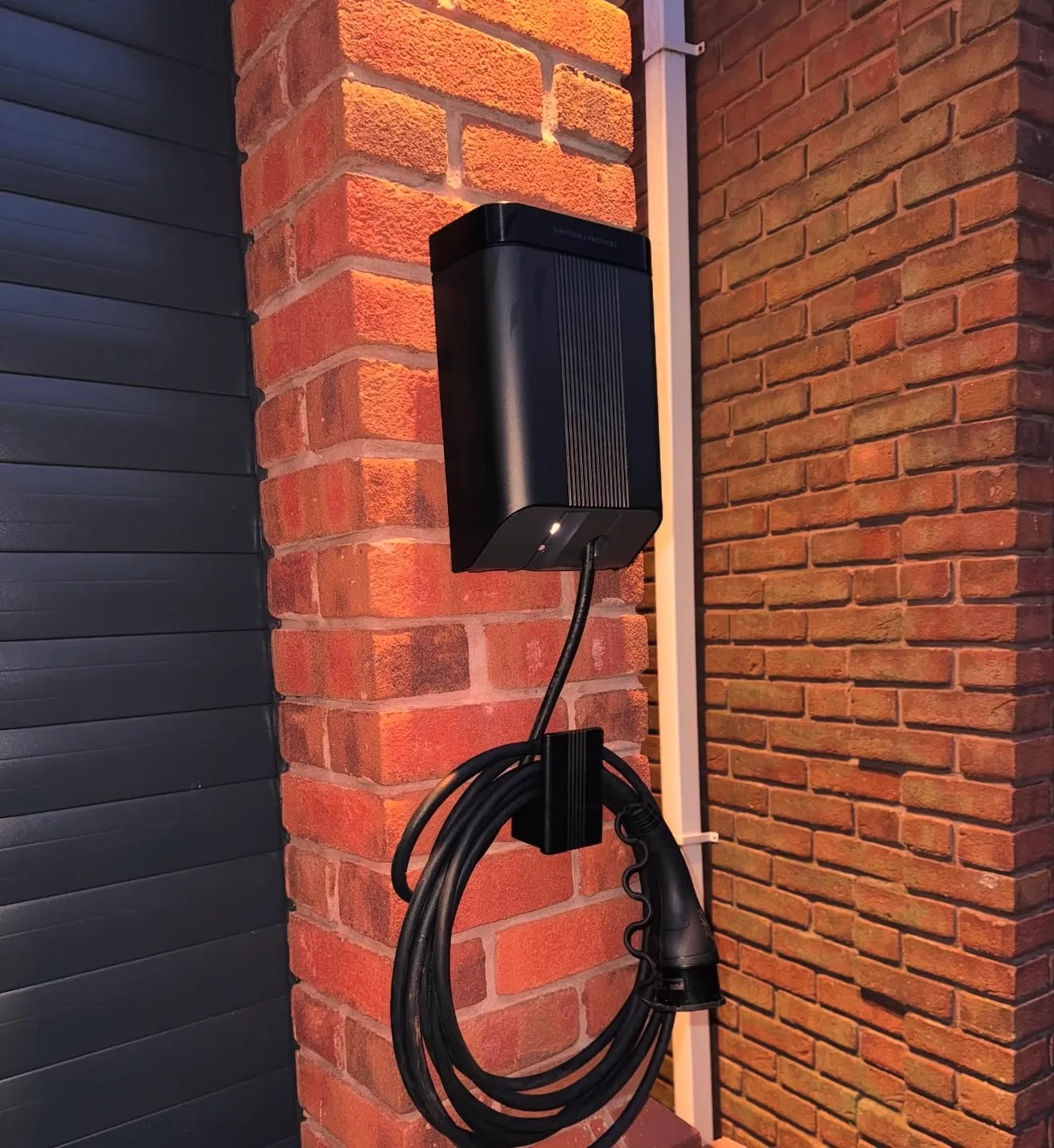
  • A black EV charger with its cable coiled on the holster, mounted on a brick pillar beside a garage door and downpipe.

    EV charger on a brick pillar

  • Front view of a wall-mounted EV charger on a brick pillar between a garage door and a timber gate, its charging cable coiled on a holster.

    EV charger with its cable on the holster
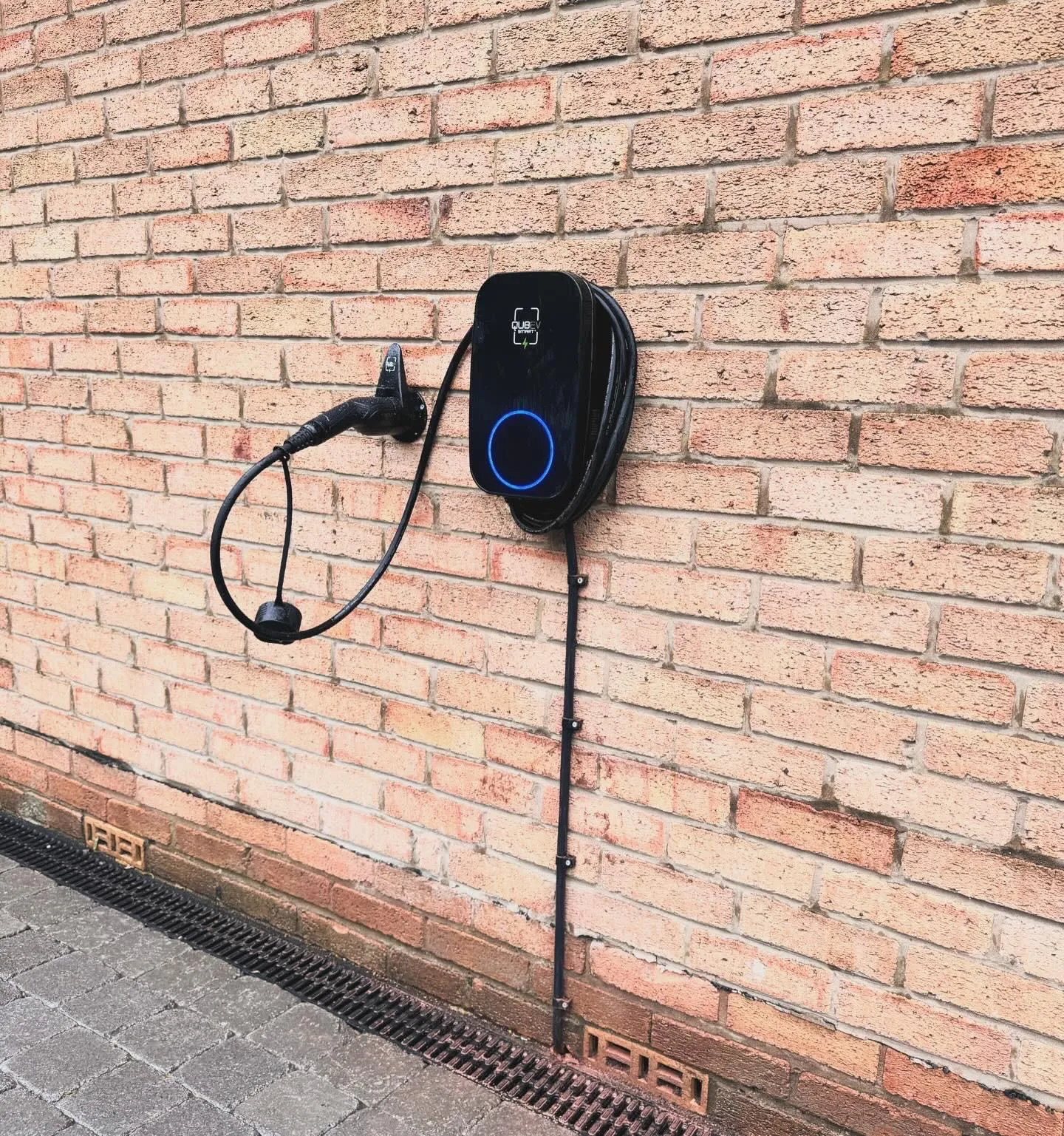
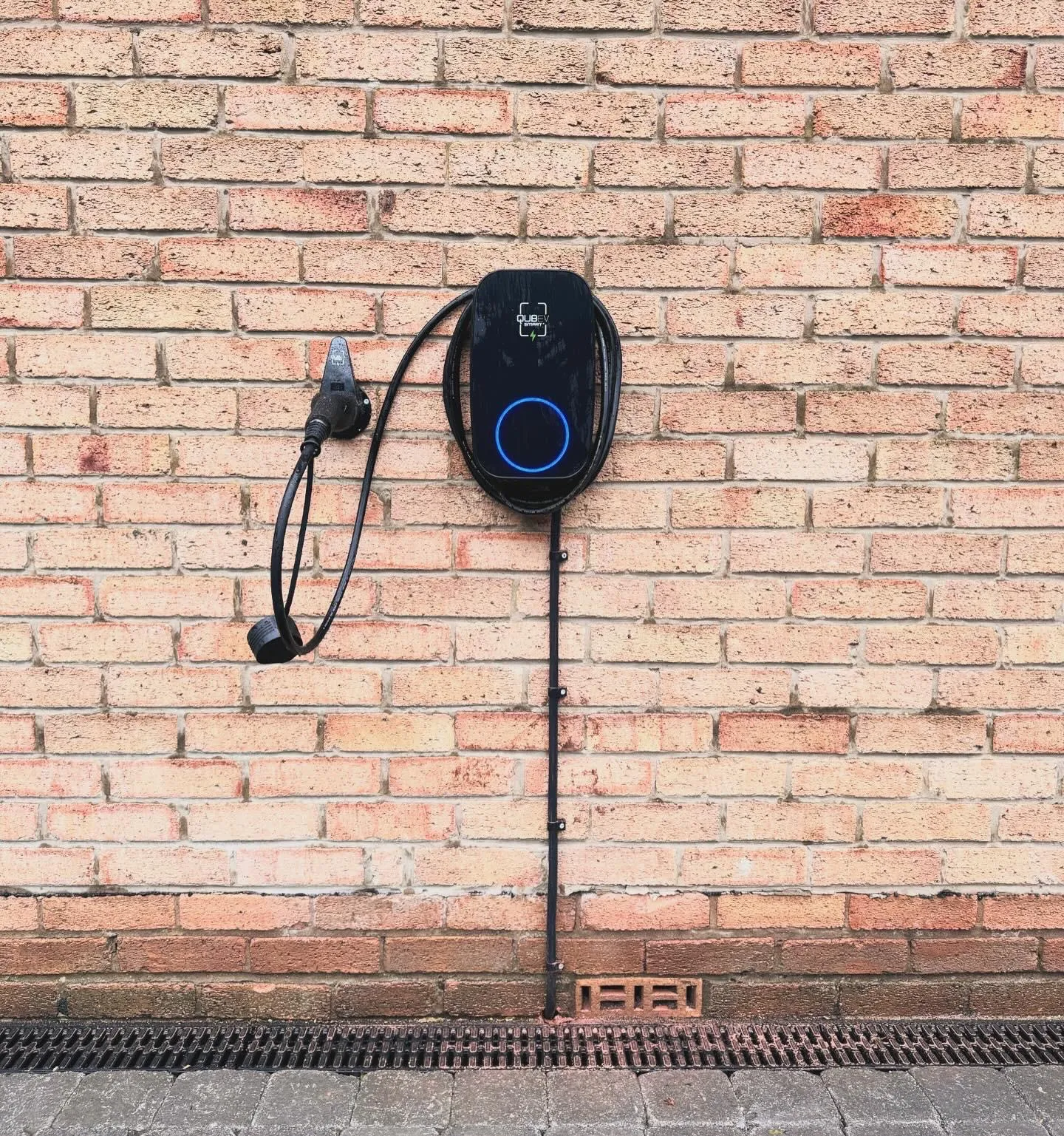
  • A black EV charger on a brick wall with its cable wrapped around the unit and the connector parked in a wall holster beside it.

    EV charger and connector holster on a brick wall
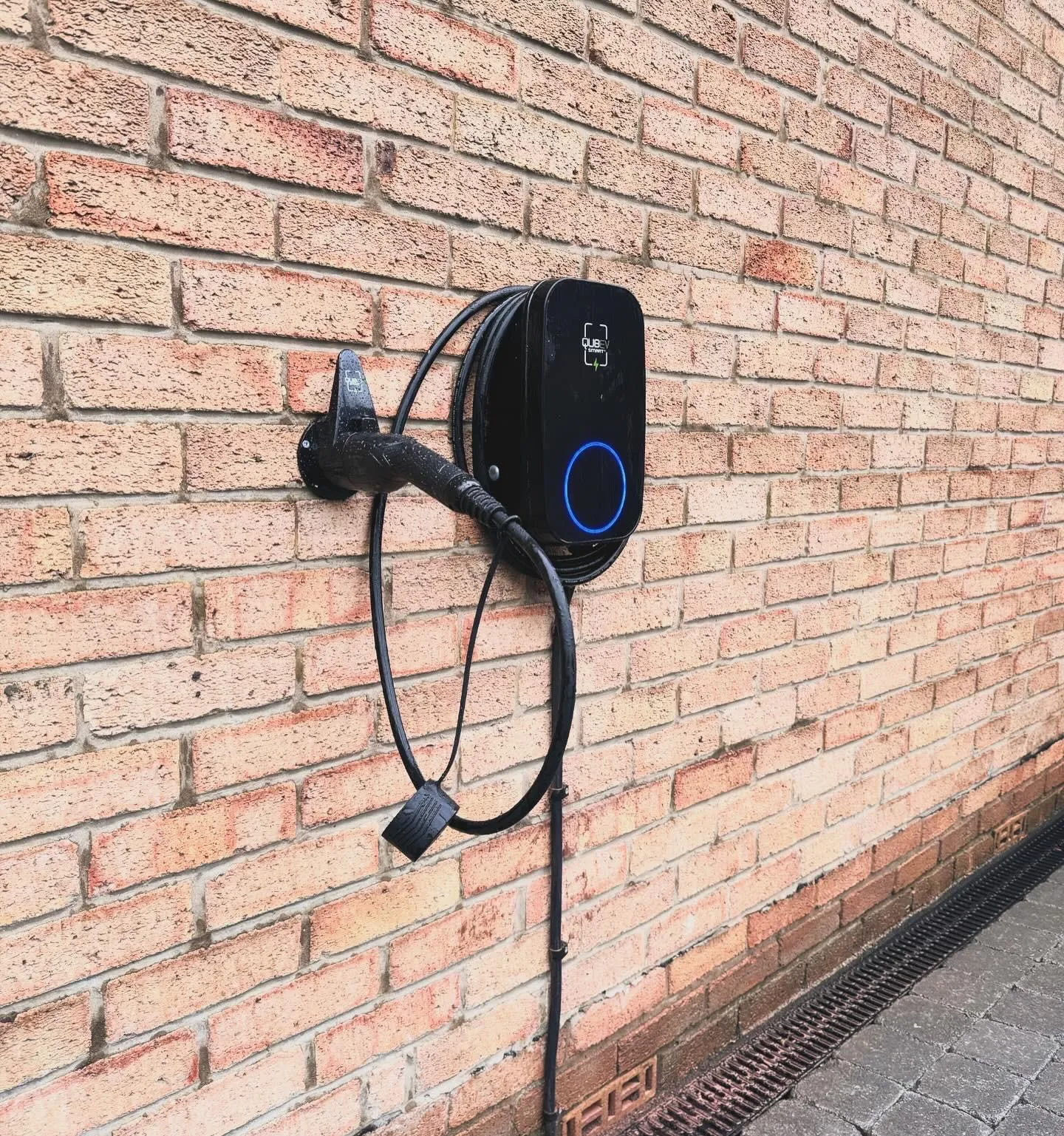
  • The same EV charger seen from the side, its cable looped round the unit and the supply in black conduit running down the wall.

    EV charger and holster from the side

  • An EV charger on a brick wall seen from a lower angle, with its supply run in black conduit down to ground level.

    EV charger with the supply in black conduit
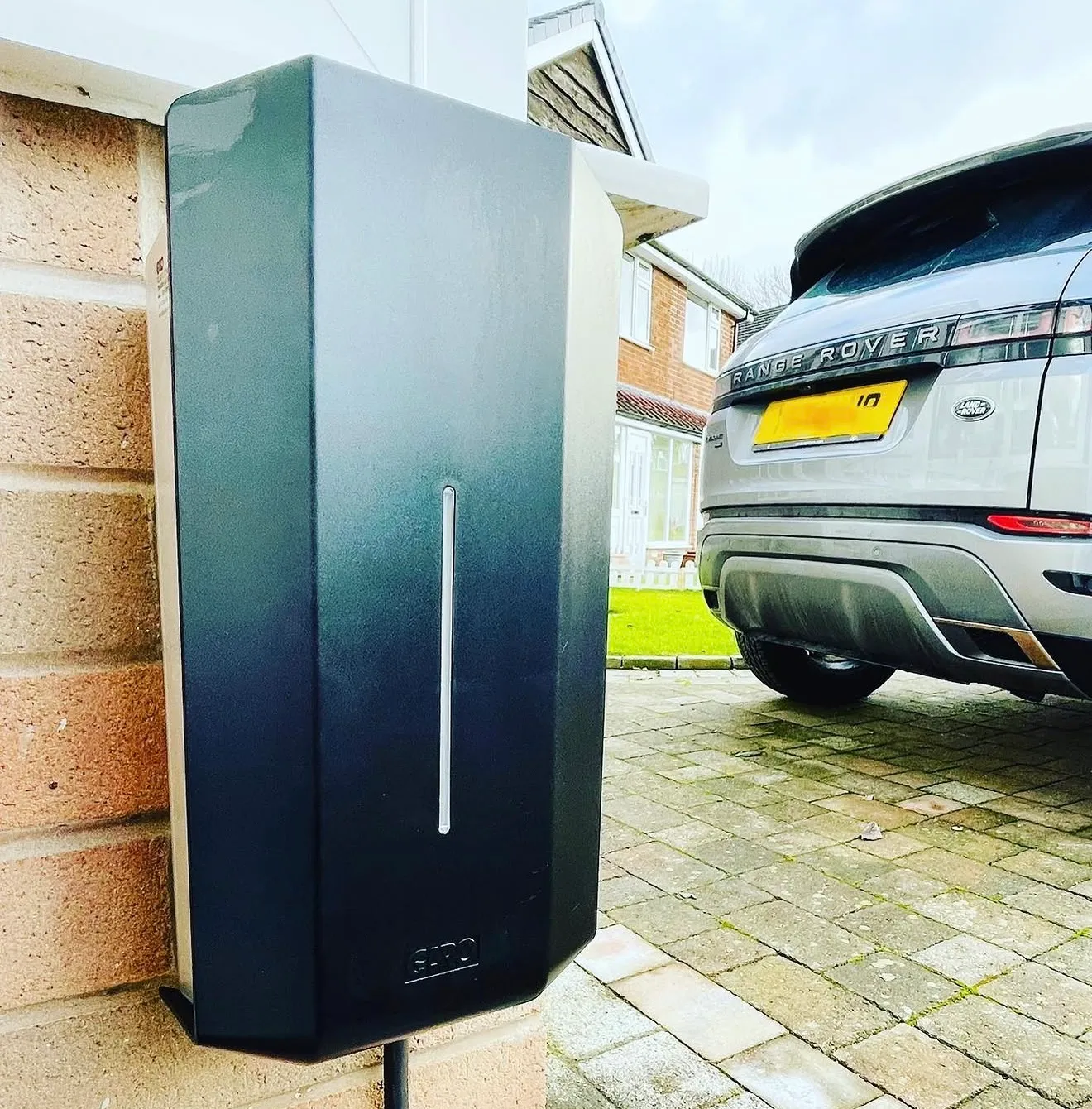
  • A dark grey GARO EV charger fixed to the end of a brick wall beside a block-paved driveway, with its supply in black conduit below.

    GARO EV charger beside a driveway

See all photos →

Earthing and the supply

Chargers used outdoors have their own earthing rules, and many homes on a PME supply need either a charger with built-in open-PEN protection or a separate earth electrode. Part of the job is working out which applies to your house and doing it properly.

“George completed fitment of an EV charger at my property.He was competitive on price,answered phone calls and messages in a prompt manner,somewhat lacking with some companies.All in all, great job and was tidy in the process”
David Nash · Google review · August 2025

Notifying the network

A new charge point has to be notified to the electricity network operator. For most homes that's a form we submit as part of the installation. If the supply or the main fuse needs upgrading first, that's raised before any work starts, because the network operator does that side.

Tethered or untethered

Tethered units have the cable fixed to the charger, so it's always there. Untethered units have a socket and you use your own cable, which keeps the wall tidier and suits a change of car. We fit whichever suits you, and can advise if you haven't chosen.
EV chargers: common questions

Do I need planning permission for a home charger?

Usually not. A wall-mounted charge point at a house is normally permitted development. Listed buildings and some conservation areas are different, so check with the council if either applies to you.

Can my house supply a 7kW charger?

Most can, but it depends on the size of the main fuse and what else runs off the supply, such as an electric shower or hob. Checking that is the first part of the job.

Will it work with any car?

A standard home charge point uses the Type 2 connector that current electric cars in the UK charge from, either through the tethered cable or your own.

Is the work certified?

Yes. It's a new circuit, so it's notifiable, and we certify and notify it ourselves under NAPIT. You get the electrical installation certificate at the end.

Get a free, no‑obligation quote

Working across Staffordshire and the North West, including Runcorn, Widnes, Warrington and Cannock.

  1. Send a photo on WhatsApp

    A picture of the job and a line about it is plenty to start with.

  2. George replies

    WhatsApp and the form both go straight to his phone, so there's no office in between.

  3. Site visit if needed

    If the job needs seeing in person first, George will arrange a time to come out and take a look.

  4. Get a free quote

    No obligation to go ahead.

Or email george@gilfoyleelectrical.co.uk